What to Do With Old Mattresses: 7 Disposal Options
Table of Contents
- Why Proper Mattress Disposal Matters
- Mattress Recycling Near Me: Finding Local Programs
- How to Donate a Mattress: Charities and Organizations
- Junk Removal Services for Mattresses
- DIY Mattress Breakdown and Upcycling
- Retailer Take-Back Programs and Curbside Pickup
- Cost-Benefit Analysis: Which Disposal Method Works Best
- Frequently Asked Questions
Last Updated: October 3, 2026
Why Proper Mattress Disposal Matters
Most old mattresses end up in landfills, where they occupy space for decades.
You have several options for what to do with old mattresses, recycling, donating, or professional disposal, each with different benefits depending on your mattress’s condition and timeline.
What to do with old mattresses depends on three factors: mattress condition, location, and timeline. This guide covers every option to help you choose what works best.
Mattress Recycling Near Me: Finding Local Programs
Mattress recycling diverts materials from landfills by separating springs, foam, wood, and textiles for reuse.
How to Locate Recycling Facilities in Your Area
To find a recycling center:
- Search online for “mattress recycling near me”
- Call your local waste management department
- Check the Mattress Recycling Council website for certified locations
- Ask about seasonal bulk pickup events
Most facilities charge $5-$20 or accept mattresses free through municipal programs. Call ahead to confirm fees and hours.
What Happens to Mattresses at Recycling Centers
Workers separate the cover, foam, springs, and wood frame. Spring steel is melted for new products, foam becomes carpet padding or animal bedding, and textiles become insulation. A single recycled mattress keeps roughly 80 pounds of material out of landfills.
How to Donate a Mattress: Charities and Organizations
Donating a mattress is ideal if it’s in usable condition, but charities enforce strict sanitation requirements to protect recipients and limit liability.
Donation Criteria and Sanitation Standards
Most organizations require:
- No visible stains, tears, or damage
- No bed bug signs (non-negotiable)
- Firm structure with proper support
- Clean condition, free of odors
- Purchased within 5-10 years
How to Inspect for Bed Bugs Before Donation
Before donating, inspect for bed bugs: look for brown or rust-colored spots on seams and underside, check piping and tufting, and smell for musty odors. If the mattress has been in an infested home or you’ve traveled recently, inspect carefully before donating.
Legal and Liability Implications
Donating an infested mattress exposes the receiving organization to significant liability. Many charities require donors to sign a statement certifying the mattress is pest-free. Knowingly donating an infested mattress can result in:
- The organization refusing the donation and demanding removal
- Legal liability if the recipient contracts bed bugs and can trace the source
- Potential fines in some jurisdictions (a few states have regulations against donating pest-infested furniture)
If you discover bed bugs during inspection, the mattress must be disposed of, not donated. Professional disposal or DIY breakdown in isolation (away from other furniture) is the responsible path.
Organizations That Accept Mattress Donations
Organizations that accept mattress donations include:
- Goodwill and Salvation Army locations, most accept mattresses in good condition; call ahead to confirm
- Local homeless shelters and transitional housing programs, often have high demand for furniture
- Habitat for Humanity ReStores, accept gently used mattresses as part of furniture donations
- Faith-based charities and community centers, many operate furniture banks for low-income families
- Furniture banks, nonprofit organizations in most metropolitan areas that distribute free or low-cost furniture to families in crisis
- Craigslist and Facebook Marketplace, free or low-cost local pickup options if the mattress is in good condition
Call ahead to confirm they accept mattresses and understand their delivery requirements. Some organizations pick up large items for free, while others require you to drop off the mattress yourself. Ask about their inspection process, reputable organizations will ask about the mattress’s history and condition before accepting it.
Junk Removal Services for Mattresses
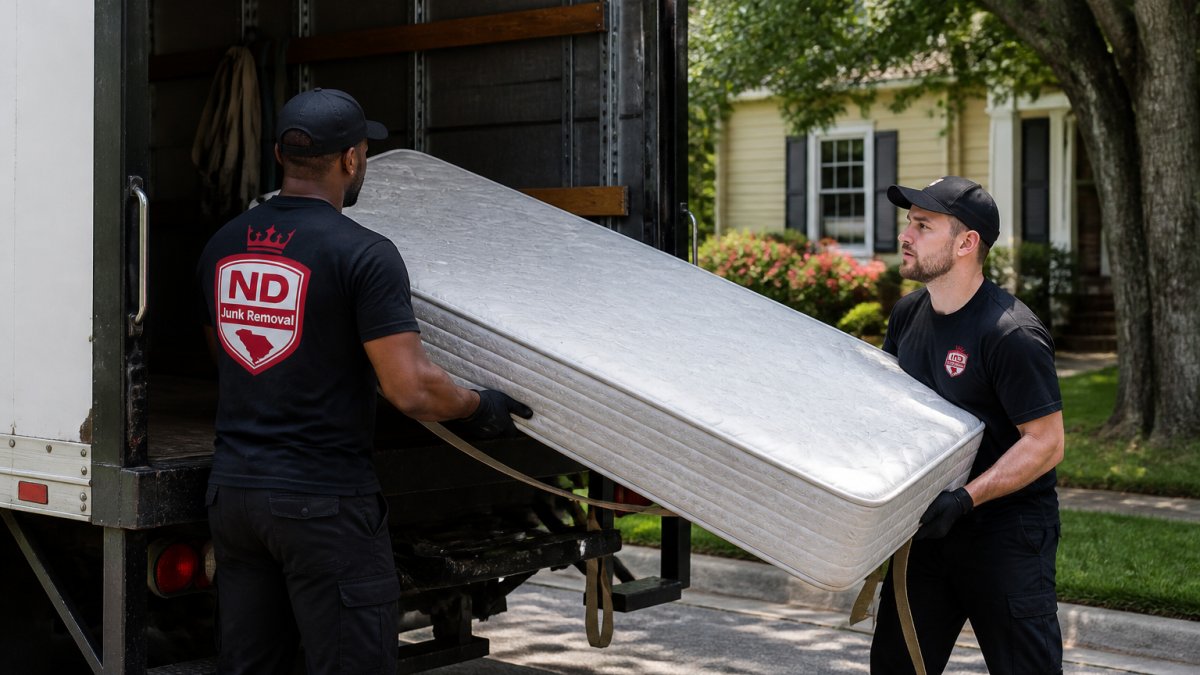
Professional junk removal is the fastest option when you need a mattress gone immediately. Services like ND Junk Removals handle the entire process, loading, hauling, and responsible disposal.
This approach eliminates the hassle of finding drop-off locations, scheduling pickups, or worrying about proper handling.
ND Junk Removals prioritizes sustainability by ensuring mattresses are recycled whenever possible rather than sent to landfills.
Pricing depends on mattress size, your location, and whether you’re removing other items alongside the mattress. Visit the ND Junk Removals pricing page for a free quote, or call now & save $20 OFF Your Pickup!
DIY Mattress Breakdown and Upcycling
If you’re willing to put in effort, breaking down a mattress yourself opens up creative reuse options. This approach works best if you have time, space, and proper tools.
What you’ll need:
- Utility knife or box cutter
- Heavy-duty work gloves
- Dust mask (foam particles can irritate lungs)
- Flathead screwdriver
- Large tarp or drop cloth
Basic breakdown steps:
- Remove the cover, Cut along seams and peel away the fabric
- Extract the springs, Use a screwdriver to separate the wooden frame from metal springs
- Separate foam layers, Cut through polyurethane foam and remove padding
- Sort materials, Group springs, wood, foam, and textiles separately
Upcycling ideas for recovered materials:
- Steel springs become garden trellises or decorative wall art
- Foam blocks transform into pet beds, cushions, or gardening knee pads
- Wooden frames become raised garden beds or outdoor benches
- Fabric covers can be repurposed into cleaning rags or pet toys
This method only works if the mattress is free of bed bugs and mold. If there’s any doubt about the mattress’s sanitary condition, skip DIY breakdown and use professional disposal instead.
Retailer Take-Back Programs and Curbside Pickup
When you buy a new mattress, many retailers offer haul-away services for your old one.
Call Now & Save $20 OFF Your Pickup! →
Major retailers offering take-back programs:
- Mattress specialty stores typically remove old mattresses at delivery
- Furniture retailers often include haul-away with mattress purchases
- Some big-box retailers provide curbside pickup options
- Online mattress companies sometimes partner with local removal services
Ask about take-back policies before you buy. Many retailers bundle removal into the purchase price, making this the most convenient option if you’re replacing your mattress anyway.
Curbside pickup programs in some municipalities allow you to leave your mattress at the curb on designated bulk collection days.
Cost-Benefit Analysis: Which Disposal Method Works Best
Choosing the right disposal method depends on your priorities: cost, speed, environmental impact, or effort level. Understanding the true cost of each option, including hidden factors like fuel, time, and convenience, helps you make an informed decision.
Pricing Breakdown by Disposal Method
| Disposal Method | Typical Cost | Best For | Timeline | Effort Level |
|---|---|---|---|---|
| Recycling facility drop-off | $5-$20 per mattress | Environmental priority | 1-2 weeks | Medium |
| Donation (free pickup) | Free | Helping others | 1-2 weeks | Low-Medium |
| Junk removal service | $75-$200 per mattress | Speed and convenience | Same day | Minimal |
| DIY breakdown | Free (tools only) | Cost savings and reuse | 2-4 hours | High |
| Retailer take-back | Free-$50 (often bundled) | Buying new mattress | At delivery | Minimal |
| Curbside bulk pickup | Free | Low effort | Monthly schedule | Minimal |
Recycling facilities typically charge $5-$20 per mattress, though some municipal programs offer free drop-off on designated collection days.
Donation is free if the organization picks up the mattress.
DIY breakdown costs nothing in disposal fees, but requires 2-4 hours of labor and basic tools (utility knife, gloves, dust mask).
Retailer take-back programs are often free when you purchase a new mattress, making this the lowest-cost option if you’re replacing your mattress anyway.
Real-World Cost Scenarios
Scenario 1: Budget-conscious homeowner with time
- Use free curbside pickup if available in your area
- Cost: $0
- Timeline: 1-3 months (depends on collection schedule)
- Best if you can wait and have storage space
Scenario 2: Homeowner buying a new mattress
- Use retailer take-back program at purchase
- Cost: $0-$50 (often free)
- Timeline: At delivery (1-2 weeks)
- Best if you’re replacing your mattress anyway
Scenario 3: Homeowner needing it gone this week
- Use professional junk removal
- Cost: Visit website for quote
- Timeline: Same day or next day
- Best if speed and convenience outweigh cost
Scenario 4: Eco-conscious DIYer with tools and space
- Break down the mattress yourself and recycle components
- Cost: $0 (or $5-$20 if you haul springs to a scrap metal facility)
- Timeline: 2-4 hours
- Best if you have time, space, and want to recover materials
Scenario 5: Donor with a usable mattress
- Donate to a local charity with free pickup
- Cost: $0
- Timeline: 1-2 weeks
- Best if the mattress is in good condition and you want to help others
Hidden Costs and Trade-Offs
When comparing methods, consider factors beyond the sticker price:
Time and convenience: Junk removal costs more upfront but saves 2-4 hours of your time and eliminates the need to find a facility, schedule transport, or lift a heavy mattress.
Environmental impact: Recycling and donation keep mattresses out of landfills, but require more effort on your part.
Storage: If you need to store the mattress while waiting for curbside pickup or a donation pickup appointment, factor in the space cost.
Vehicle wear: Self-hauling to a recycling facility costs approximately $0.67 per mile in vehicle wear and fuel. A 20-mile round trip costs roughly $13.40 in vehicle expenses, plus your time.
Which Method Offers the Best Value?
For most homeowners, retailer take-back programs offer the best overall value if you’re buying a new mattress, they’re free or low-cost and require minimal effort.
Donation is the best choice if your mattress is in good condition and you want to help others while keeping material out of landfills. DIY breakdown appeals to eco-conscious homeowners with time and space, but only if the mattress is pest-free and you have safe tools and proper ventilation.
Frequently Asked Questions
What’s the easiest way to get rid of an old mattress?
The easiest method depends on your mattress condition and timeline. If the mattress is still usable, donation to a local charity is fast and free. For damaged mattresses, junk removal services offer the most convenient option, they handle loading and transportation. Curbside bulk item collection is another simple choice if your municipality offers it; contact your local waste management office for pickup dates. For those with time, recycling centers accept mattresses and divert materials from landfills, though you’ll need to transport it yourself.
Can I donate a used mattress to charity?
Yes, many charities accept used mattresses if they meet sanitation standards. The mattress must be free of stains, bed bugs, mold, and odors. Organizations like Goodwill, Salvation Army, and local homeless shelters often accept donations. Some furniture banks and community nonprofits also take mattresses for families in need. Call ahead to confirm acceptance, as some facilities have specific requirements. Many charities offer free pickup for donations, making this a cost-free and socially responsible option.
How do I find mattress recycling programs near me?
Start by contacting your local waste management or sanitation department, they maintain lists of approved drop-off facilities and collection events. Search online for ‘mattress recycling near me’ to find transfer stations and specialized recyclers in your area. Many retailers that sell mattresses also operate take-back programs or partner with recyclers. The Mattress Recycling Council website offers a facility locator tool. Some municipalities host seasonal collection events for bulk items like mattresses. Recycling centers break down mattresses into spring steel, polyurethane foam, and textiles, diverting materials from landfills.
What should I know before hiring a junk removal service for a mattress?
Verify the company is fully licensed and insured to protect your property during removal. Get a clear, upfront quote with no hidden fees, pricing depends on mattress size, quantity, and your location. Ask about their disposal methods: reputable services prioritize donation and recycling over landfill disposal. Confirm their scheduling flexibility if you have a tight timeline. Check reviews from local customers to ensure reliability. Professional junk removal services handle all heavy lifting and transportation, making them ideal for full-house cleanouts or time-sensitive situations.