
Cost of Junk Removal Services: Pricing Guide
Table of Contents
- What Affects the Cost of Junk Removal Services
- Junk Removal Cost by Truckload: Understanding Pricing Models
- Minimum Junk Removal Charge: What You Should Expect
- Using a Junk Removal Quote Checklist to Compare Estimates
- Ways to Save on Junk Removal Without Sacrificing Quality
- Residential vs. Commercial Junk Removal Pricing
- Specialized Item Removal: Appliances, Furniture, and Construction Debris
- Getting a Free Estimate and Booking Your Junk Removal
- Frequently Asked Questions
Last Updated: October 10, 2026
What Affects the Cost of Junk Removal Services
Understanding what drives junk removal pricing helps you compare estimates fairly and avoid unexpected charges.
Volume and Weight of Items
The primary cost driver is volume. Junk removal companies price by truckload capacity: a single bag of old clothes costs far less than a garage full of furniture, appliances, and boxes.
Weight also matters. A truck bed of lightweight cardboard boxes costs less than the same space filled with steel filing cabinets or concrete blocks. Providers charge based on truck space occupied: a quarter-truck load costs less than a half-truck load, which costs less than a full truck.
Before calling for an estimate, take photos of everything you want removed and note the room locations. This helps the estimator give you an accurate quote without needing to visit in person, which saves time for both of you.
Type of Items Being Removed
Standard household items like furniture and boxes are straightforward to haul, but specialized items require different handling, permits, or disposal fees.
Hazardous materials, paint, batteries, and refrigerants carry regulatory disposal costs. Electronics must be recycled responsibly. Construction debris requires separate dumping. Hot tubs need specialized equipment.
Understanding the difference helps explain why a quote for mixed items costs more than one for furniture alone.
Accessibility and Labor Requirements
Accessibility directly impacts labor time and cost. Ground-floor items load quickly; third-story attics, narrow basement stairs, or items behind furniture take significantly longer.
Tight spaces, narrow hallways, or limited parking increase labor costs. Items staged near the curb or driveway reduce labor time substantially.
Single-story homes load faster than multi-story homes. Apartments with elevators are easier than walk-ups.
Junk Removal Cost by Truckload: Understanding Pricing Models
Most providers price by truck capacity rather than hourly labor, so you know the approximate cost upfront based on how much space your items occupy.
Half-Truck, Full-Truck, and Multiple-Load Pricing
Standard pricing tiers are quarter-truck, half-truck, and full-truck loads. A half-truck load occupies roughly 50% of cargo space; a full-truck load fills the truck. Multiple loads cost extra if items exceed one truck.
Two half-loads cost more than one full load, encouraging you to gather everything at once rather than scheduling multiple pickups.
How Truckload Estimates Are Calculated
Estimators use visual assessment and ask detailed questions about what you’re removing and where items are located. Many companies offer free in-person or photo-based estimates. Photo estimates work well for straightforward jobs; in-person visits provide better accuracy for complex jobs, full-house cleanouts, or estate removals.
The most accurate estimates come from photos taken from multiple angles, showing the full scope of what needs to be removed. This prevents surprises on pickup day when the estimator realizes there’s more than expected.
Minimum Junk Removal Charge: What You Should Expect
Nearly every provider has a minimum charge, typically covering a quarter-truck load, because the company must dispatch a truck, pay the driver, and cover fuel and disposal fees regardless of volume. Minimums vary by market and company model.
Understanding the minimum helps you decide whether to hire a professional or handle small jobs yourself. For larger loads, professional removal becomes cost-effective quickly.
Using a Junk Removal Quote Checklist to Compare Estimates
Getting multiple quotes is essential because pricing varies significantly. A structured checklist ensures you’re comparing apples to apples and spotting hidden fees.
Key Questions to Ask Before Booking
Ask every provider these specific questions:
- What’s included in the quoted price? Does it cover loading, hauling, and disposal?
- Are there additional fees for heavy items, hazardous materials, or difficult access?
- What items do you not accept, and why?
- Is the estimate binding, or could the final bill be higher?
- How quickly can you schedule pickup?
- Do you offer same-day or next-day service?
- What payment methods do you accept?
- Do you provide a receipt or invoice?
Red Flags: Hidden Fees and Extra Charges
Watch for vague pricing language like “pricing depends on the final load” or “we’ll confirm the cost on arrival.” Legitimate companies quote a firm price based on the estimate.
Common hidden fees include fuel surcharges, disposal fees, weight-based charges, difficult-access premiums, hazardous material fees, and donation fees.
Ask explicitly: “Is the price you’re quoting the total I’ll pay, or are there additional fees on the day of service?” A company that hedges this answer isn’t worth hiring.
If a quote seems significantly lower than others, ask why. Unusually cheap providers may cut corners on proper disposal, skip recycling commitments, or add undisclosed fees at pickup. The lowest price isn’t always the best value.
Ways to Save on Junk Removal Without Sacrificing Quality
You can reduce junk removal costs through strategic planning without compromising the quality or reliability of service.
Scheduling Off-Peak Times and Bundling Services
Most companies are busiest on weekends and spring/summer. Bundling multiple jobs (garage cleanout plus estate removal) into one trip saves on dispatch, fuel, and the second minimum charge.
Pre-Sorting Items and DIY Preparation
Sorting items before the crew arrives reduces their labor time. Separate items you want to donate from pure junk. Group heavy items together and light items together. This makes loading faster and more efficient.
If you can move items closer to the truck or stage them in one accessible area, you reduce labor time significantly. Every minute saved on loading translates to lower cost.
Removing items you can donate yourself also reduces the truckload size. A trip to a local donation center for clothing and smaller furniture means the junk removal crew focuses on the heavy, difficult-to-move items that justify professional removal.
Residential vs. Commercial Junk Removal Pricing
Residential and commercial jobs follow different pricing models and have different cost drivers.
Residential Cleanouts and Estate Removals
Residential jobs typically use the per-truckload pricing model described earlier. A garage cleanout, basement decluttering, or attic removal falls into this category. Pricing is straightforward: estimate the load size, quote the cost.
Call Now & Save $20 OFF Your Pickup! →
Estate removals, clearing an entire home after a death or move, are larger jobs but follow the same pricing structure. Multiple truckloads are common.
Office, Retail, and Warehouse Clearouts
Commercial jobs often involve more complex pricing because they include additional considerations: business hours constraints, need to minimize disruption, potential for hazardous materials, and regulatory compliance around proper disposal.
Office cleanouts may include furniture, filing cabinets, electronics, and building materials. Retail locations may have shelving, displays, and inventory. Warehouse clearouts involve large volumes of materials. These jobs often require multiple trucks and may involve scheduling around business operations.
Commercial pricing is frequently quoted per job rather than per truckload because the scope is harder to standardize. A company may quote a flat fee for a complete office clearout because the job involves multiple rooms, multiple load types, and coordinated scheduling.
Specialized Item Removal: Appliances, Furniture, and Construction Debris
Certain items require specialized handling, equipment, or disposal methods, which affects pricing.
Furniture and Mattress Removal
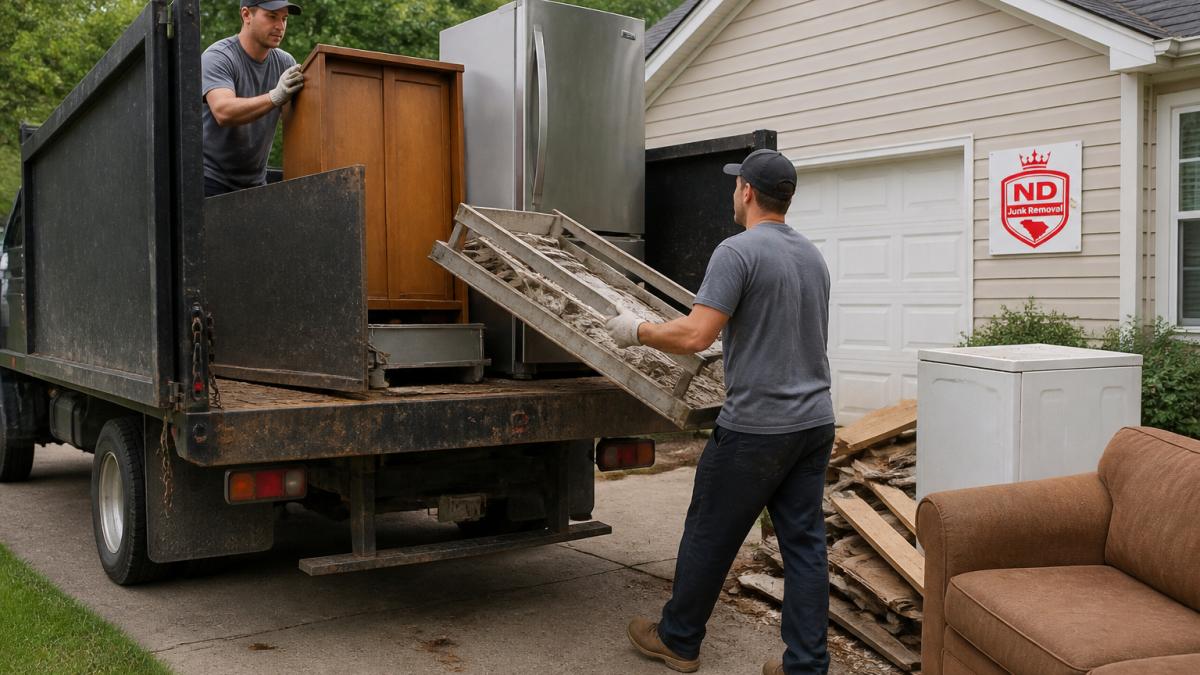
Furniture is bulky and space-consuming. A single couch or bed can occupy a quarter of a truck’s capacity. Mattresses take up significant space and are awkward to handle. Many providers charge standard per-truckload rates for furniture without additional fees.
Mattress disposal has specific regulatory requirements in many areas, they often cannot go to standard landfills and must be processed at specialized facilities. This increases disposal costs, which some providers pass to customers as a line-item fee.
Appliances, Electronics, and Hazardous Materials
Refrigerators, freezers, washers, dryers, and air conditioning units contain refrigerants or other hazardous components that require certified disposal. Many providers charge additional fees to cover proper recycling and regulatory compliance.
Electronics like computers, televisions, and printers contain valuable materials and hazardous substances. Proper e-waste recycling is required by law in most states.
Paint, chemicals, batteries, and other hazardous household materials cannot be mixed with regular junk. Proper hazardous waste disposal requires certified facilities and documentation.
Construction Debris and Building Materials
Construction debris, drywall, lumber, concrete, roofing materials, windows, is often priced differently than household junk. Some providers specialize in construction debris and offer better rates for large volumes. Others charge premium rates because disposal facilities for construction materials have different processing requirements.
Concrete, bricks, and stone are particularly heavy and expensive to dispose of. Asbestos-containing materials require certified removal and disposal. If your project involves demolition or renovation debris, get a separate estimate focused on construction waste rather than bundling it with household junk removal.
Hot Tubs, Spas, and Bulky Items
Hot tubs and spas require specialized equipment to move safely. They’re heavy, awkward, and often need to be drained before removal. Expect significant additional charges for hot tub removal depending on size and accessibility.
Large items like pianos, safes, or outdoor equipment may require specialized moving equipment or multiple crew members.
Getting a Free Estimate and Booking Your Junk Removal
The estimate process is your opportunity to verify pricing transparency and assess whether a company is reliable.
What to Expect During the Estimate Process
Most junk removal companies offer free estimates, either in-person or photo-based. In-person estimates take 15-30 minutes. The estimator walks through your property, assesses what you’re removing, notes accessibility challenges, and identifies any specialized items requiring additional fees.
Photo estimates are faster. You take photos from multiple angles showing all items to be removed, upload them, and receive a quote within hours. Photo estimates work well for straightforward jobs but may be less accurate for complex removals.
A professional estimator will explain what’s included in the price, ask about your timeline, and clarify any items that might incur additional charges. They should provide a written estimate, not just a verbal quote, so you have documentation of what was promised.
Same-Day and Next-Day Scheduling Options
Many junk removal companies offer same-day or next-day pickup. If you need fast service, ask about premium scheduling fees upfront.
Scheduling flexibility varies by season and demand. Summer and weekends are busier, so same-day availability is less common. Weekday scheduling in off-season months typically offers better availability and lower costs.
When you book, confirm the appointment time window, ask what to expect on arrival day, and clarify your payment method. Reputable companies send a confirmation with crew details and contact information so you know who’s arriving and when.
Getting an accurate junk removal quote requires asking the right questions and comparing pricing across multiple providers. At ND Junk Removals, we provide upfront, transparent pricing with no hidden fees, so you know exactly what you’re paying before we arrive.
Frequently Asked Questions
What is the minimum charge for junk removal?
Most junk removal services charge a minimum fee to cover the truck dispatch and labor costs. This minimum typically applies to smaller jobs or partial loads. The exact minimum junk removal charge depends on factors like service area, fuel costs, and labor availability. Contact a local provider for current minimums and to discuss whether your job qualifies for any discounts or package deals.
How much does junk removal typically cost?
Junk removal pricing varies based on volume, item type, accessibility, and labor requirements. Costs are often calculated by truckload size (half-truck, full-truck, or multiple loads) or by the amount of space your items occupy in the truck. Residential cleanouts, commercial office clearouts, and specialized removals like appliance or construction debris hauling each have different pricing structures. Request a free estimate for an accurate quote based on your specific needs.
What factors should I ask about when getting a junk removal quote?
Use a junk removal quote checklist covering: total cost and what it includes, whether disposal and recycling fees are separate, timeline and scheduling flexibility, insurance coverage, and what happens to donated or recycled items. Ask if the price is final or if additional charges may apply for hazardous materials, heavy lifting, or unexpected obstacles. Confirm whether loading, hauling, and disposal are all included in the quoted price.
How can I reduce the cost of junk removal?
Ways to save on junk removal include scheduling during off-peak times, bundling multiple services, pre-sorting items to separate recyclables and donations, and removing easy-access items yourself before the team arrives. Always compare quotes from different providers to ensure fair pricing.