Full Service Estate Cleanout: Complete Guide
Table of Contents
- What Full-Service Estate Cleanout Actually Includes
- Estate Cleanout Cost: Understanding Pricing Factors
- Estate Cleanout Timeline: How Long Does It Take?
- Estate Cleanout Donation and Recycling Options
- Estate Cleanout Checklist: Preparing Your Property
- Why Professional Estate Cleanout Matters
- Frequently Asked Questions
Last Updated: October 8, 2026
What Full-Service Estate Cleanout Actually Includes
An estate cleanout is a comprehensive removal and cleaning service that clears out an entire residential property of unwanted items, furniture, appliances, and debris. Unlike a simple junk removal, a full-service estate cleanout handles everything from sorting and hauling to final property cleaning and responsible disposal or donation of items.
When you hire a professional team for an estate cleanout, you’re getting more than just truck space.
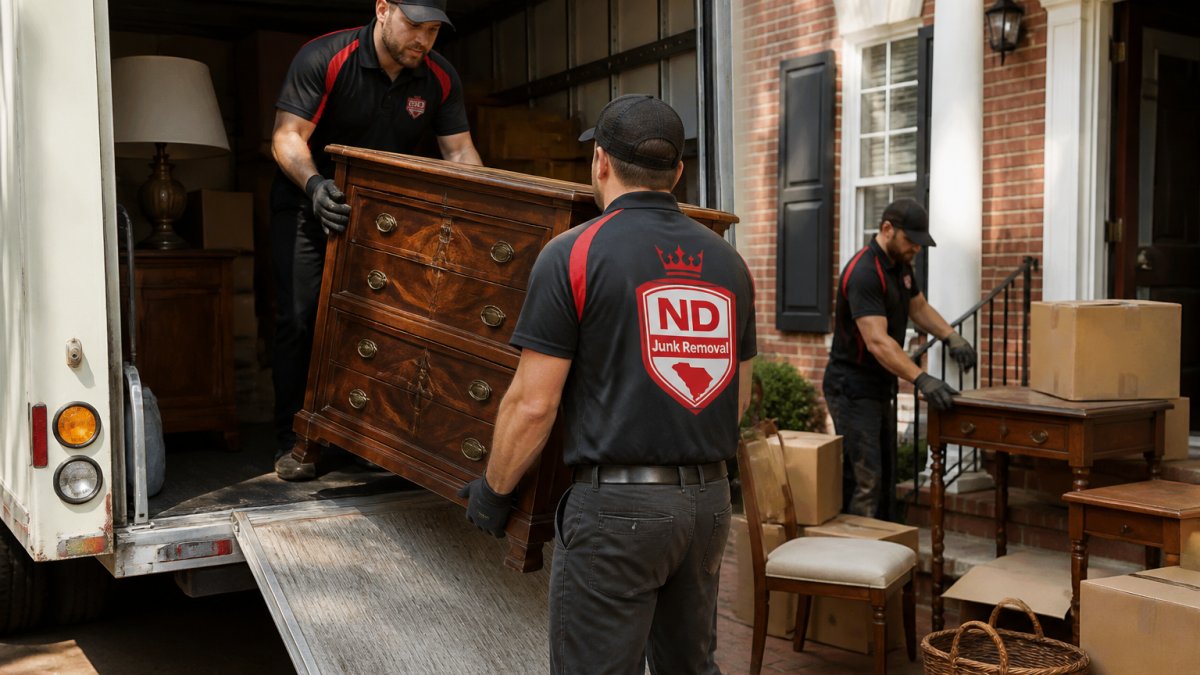
The scope includes removing everything from large furniture like sofas and bedroom sets to smaller items scattered throughout closets, cabinets, and drawers. Electronics, appliances, and items requiring special handling get managed.
Many property managers and executors underestimate how much work this actually is. A typical home contains far more than people realize when they’re facing an estate cleanout for the first time. Professional teams bring experience in prioritizing what matters, working efficiently through large volumes, and handling sensitive situations with respect.
Estate Cleanout Cost: Understanding Pricing Factors
The honest answer is that cost is driven by a handful of measurable variables, and once you understand them you can estimate your own job within a reasonable range before anyone walks the property.
The five variables that move the price
- Volume of material. This is the single biggest driver. A cleanout is usually priced by how much of a truck (or how many trucks) the contents fill, or by the cubic yardage hauled. A lightly furnished one-bedroom condo might fill a quarter of a truck; a packed four-bedroom house with a garage, attic, and shed can fill three to five loads.
- Labor hours. Heavy items (pianos, gun safes, sleeper sofas, solid-wood hutches, treadmills), stairs, tight hallways, and long carry distances from the house to the truck all add labor. A walk-out basement is far cheaper to clear than a basement reached only by a narrow interior staircase.
- Access and parking. A driveway the truck can back up to saves hours. Street parking only, gated communities, elevators, and HOA restrictions on truck size all add time.
- Sorting and separation. If you want items sorted into keep / donate / recycle / trash piles, that is skilled labor and it costs more than a straight haul. Many families find the sorting is the part they most want to delegate.
- Disposal and special handling. Appliances with refrigerant, electronics, tires, paint, and chemicals carry disposal fees and, in some cases, legal handling requirements. Mattresses and box springs often carry a per-piece recycling fee.
Realistic ranges to plan around
Pricing is typically quoted as a flat rate after a walkthrough, or as an hourly rate plus disposal fees. Rush or same-day scheduling usually carries a premium, and weekend or holiday work can as well.
Sample scenarios
What a fair quote should itemize
Ask for a written estimate that separates labor, hauling, and disposal fees so you can see where the money goes. Confirm whether the price includes final broom-sweeping or deep cleaning, whether dumpster or landfill fees are baked in, and whether the quote is guaranteed or subject to change if volume is higher than expected. A reputable company will walk the property before quoting rather than guessing over the phone.
Cost tracks volume, labor, access, sorting, and disposal, not square footage alone. Get a written, itemized quote after an on-site walkthrough, and ask specifically whether disposal fees and final cleaning are included.
ND Junk Removals provides upfront, itemized pricing with no hidden fees. The most accurate path is a free on-site estimate that accounts for your specific volume, access, and disposal needs. Visit the ND Junk Removals pricing page to see current rates and request a quote for your property.
Estate Cleanout Timeline: How Long Does It Take?
The timeline for an estate cleanout depends heavily on property size, quantity of items, and how organized the process is. A small apartment might take one day. A full house typically requires two to five days of active work, depending on complexity.
The actual estate cleanout timeline breaks down into phases. Initial assessment and planning takes a few hours. Sorting items into donation, recycling, and removal categories happens next, this is often the most time-consuming phase because it requires careful decision-making. The actual removal and loading phase moves faster once sorting is complete. Final cleaning typically takes one to three days depending on property size and condition.
If you’re working with a tight deadline, like preparing a rental unit for new tenants or meeting an estate settlement timeline, scheduling matters. Professional teams can often accommodate faster turnarounds than DIY approaches. Many property managers find that hiring professional help actually accelerates the entire process because the work happens simultaneously rather than in spare moments over weeks.
ND Junk Removals offers flexible scheduling to fit your timeline. Discussing your deadline upfront helps ensure the service plan matches your needs.
Estate Cleanout Donation and Recycling Options
A responsible cleanout is not a dumpster in disguise. The goal is to route as much as possible to donation, resale, or recycling before anything reaches a landfill, and to handle the items that legally cannot go in the trash correctly. Here is how that actually works.
How items get separated
During the walkthrough and sort, contents are divided into four streams: keep, donate/resell, recycle, and dispose. The keep pile is set aside first so nothing of value is accidentally removed. Everything else is triaged by condition and material. This separation is the step that separates a full-service cleanout from a simple haul, and it is why sorting adds labor time to a job.
Call Now & Save $20 OFF Your Pickup! →
Where usable items go
- Furniture, housewares, and clothing in good condition typically go to national thrift and charity organizations with local drop-off or pickup programs, as well as regional consignment and resale shops. Usable furniture is often the highest-value donation stream in a home.
- Books, media, and small household goods generally move through the same charity channels.
- Antiques, collectibles, and higher-value pieces are usually better routed to consignment or an estate-sale partner than to a donation bin, since the family may recover some value.
- Building materials, tools, and fixtures sometimes find a home through reuse and salvage organizations rather than general donation.
Recycling and special handling
- Electronics (televisions, computers, monitors, printers, phones) contain materials that should not go to a landfill and in some states cannot legally be placed in regular trash. They are routed to electronics recycling rather than the general waste stream.
- Appliances, refrigerators, freezers, air conditioners, and dehumidifiers, contain refrigerant that must be recovered before disposal, so they are handled separately from ordinary scrap.
- Metals (exercise equipment, shelving, appliances) have scrap value and are typically recycled.
- Mattresses and box springs usually carry a per-piece recycling fee because of limited recycling infrastructure.
- Yard waste, cardboard, and clean wood can often be recycled or composted rather than landfilled.
Items that need special care or cannot be hauled
Some contents require handling that a standard cleanout crew is not equipped for, and a good provider will tell you so upfront rather than load them onto the truck:
- Household hazardous waste, paint, solvents, pesticides, motor oil, antifreeze, pool chemicals, and cleaning chemicals. These are regulated and generally must go to a designated household hazardous waste facility or collection event, not the regular waste stream.
- Medical and sharps waste, medications and needles require specific disposal channels.
- Ammunition, firearms, and flammables, these need to be handled through appropriate legal channels and are typically excluded from standard cleanout service.
- Valuables and documents, cash, jewelry, financial papers, and identification should be secured by the family or executor before the crew begins, not discovered mid-haul.
Why this matters for an estate
For an executor, documentation of what was donated and where can matter for estate accounting. Ask whether the provider can supply a donation receipt or a basic record of items diverted to charity and recycling.
Before the crew arrives, pull anything with financial, legal, or sentimental value, documents, jewelry, cash, firearms, and store it off-site. Flag hazardous items in the garage or shed so they can be routed correctly instead of loaded by mistake.
At ND Junk Removals, our eco-friendly focus means we prioritize donation and recycling before any item reaches a landfill, and we route electronics, appliances, and other special-handling items through the proper channels. This approach supports local nonprofits, keeps regulated materials out of the waste stream, and clears your property efficiently.
Estate Cleanout Checklist: Preparing Your Property
Preparing for an estate cleanout smooths the entire process and prevents delays. A practical checklist helps ensure nothing gets overlooked.
Start by identifying items with sentimental or financial value that you want to keep or sell separately. Photograph valuable items before removal begins. Notify family members if multiple people have claims on certain belongings. Make access arrangements, ensure the team can enter all areas including locked rooms, attics, and basements.
Communicate any special handling needs upfront. Antiques, delicate items, or anything requiring careful transport should be flagged. Let the team know about items you want donated versus recycled versus discarded. Provide clear information about the property layout and any access challenges.
| Preparation Task | Timeline | Impact |
|---|---|---|
| Identify keepsakes and valuables | Before service | Prevents accidental removal |
| Notify family members | 1-2 weeks prior | Ensures agreement on items |
| Arrange property access | 1 week prior | Prevents delays on service day |
| Flag special handling items | Before service | Protects valuable or fragile items |
| Communicate disposal preferences | Before service | Ensures responsible handling |
Take photos of valuable items before the cleanout begins. This creates documentation if you need it later for insurance or estate purposes, and helps the team understand what matters most.
Why Professional Estate Cleanout Matters
Attempting an estate cleanout alone often takes far longer than expected and creates physical strain. Professional teams bring efficiency, experience, and the right equipment to complete the job safely and thoroughly.
The emotional weight of clearing out a loved one’s home is real. Professional services remove the burden of decision-making about every single item, physical labor of moving heavy furniture, and logistics of responsible disposal. For property managers and real estate professionals, outsourcing this work frees time for activities that directly generate revenue.
Safety is another critical factor. Lifting heavy furniture, navigating narrow stairs, and managing bulky items causes injuries every year. Professional teams have training, equipment, and insurance to handle these risks.
Attempting to remove large furniture or appliances without proper equipment or technique causes back injuries, property damage, and safety hazards. Professional teams prevent these costly mistakes.
An estate cleanout isn’t just about removing items, it’s about transforming a property from occupied to ready for whatever comes next. Whether that’s preparing for sale, readying a rental unit, or settling an estate, professional service delivers results that DIY approaches struggle to match.
Clearing out a property is one of those tasks that seems straightforward until you’re actually in the middle of it. Our team manages the entire process, sorting, hauling, cleaning, and proper disposal, so your property gets cleared efficiently and responsibly. Call now and save $20 off your pickup to get started with a free estimate tailored to your specific property and timeline.
Frequently Asked Questions
What does a full-service estate cleanout include?
A full-service estate cleanout covers complete property clearing, removing furniture, appliances, electronics, household items, and debris. The service includes loading items into trucks, hauling away junk, and responsible disposal through donation, recycling, or proper waste handling. Professional teams manage the entire process from start to finish, leaving your property ready for sale, lease, or transition.
How much does an estate cleanout cost?
Estate cleanout pricing depends on property size, volume of items, removal complexity, and local market factors. Costs typically account for labor, hauling distance, disposal fees, and whether items are donated or recycled versus discarded. ND Junk Removals offers transparent, upfront pricing with no hidden fees. Request a free estimate on their website to get an accurate quote based on your specific property and needs.
How long does it take to clean out an estate?
Timeline varies based on property size and item volume. A single-room cleanout may take one day, while a full house typically requires 2-5 days depending on contents and complexity. Factors affecting speed include the number of items, presence of hazardous materials, and whether items need sorting for donation or recycling.
What happens to items removed during an estate cleanout?
Responsible cleanout services prioritize donation and recycling before disposal. Usable furniture, appliances, and household goods go to local charities and donation centers. Electronics and appliances are recycled through certified e-waste programs. Hazardous materials like paint, chemicals, and batteries are handled according to environmental regulations. Items unsuitable for reuse are disposed of properly at licensed landfills. This approach keeps waste out of landfills while supporting community organizations.